
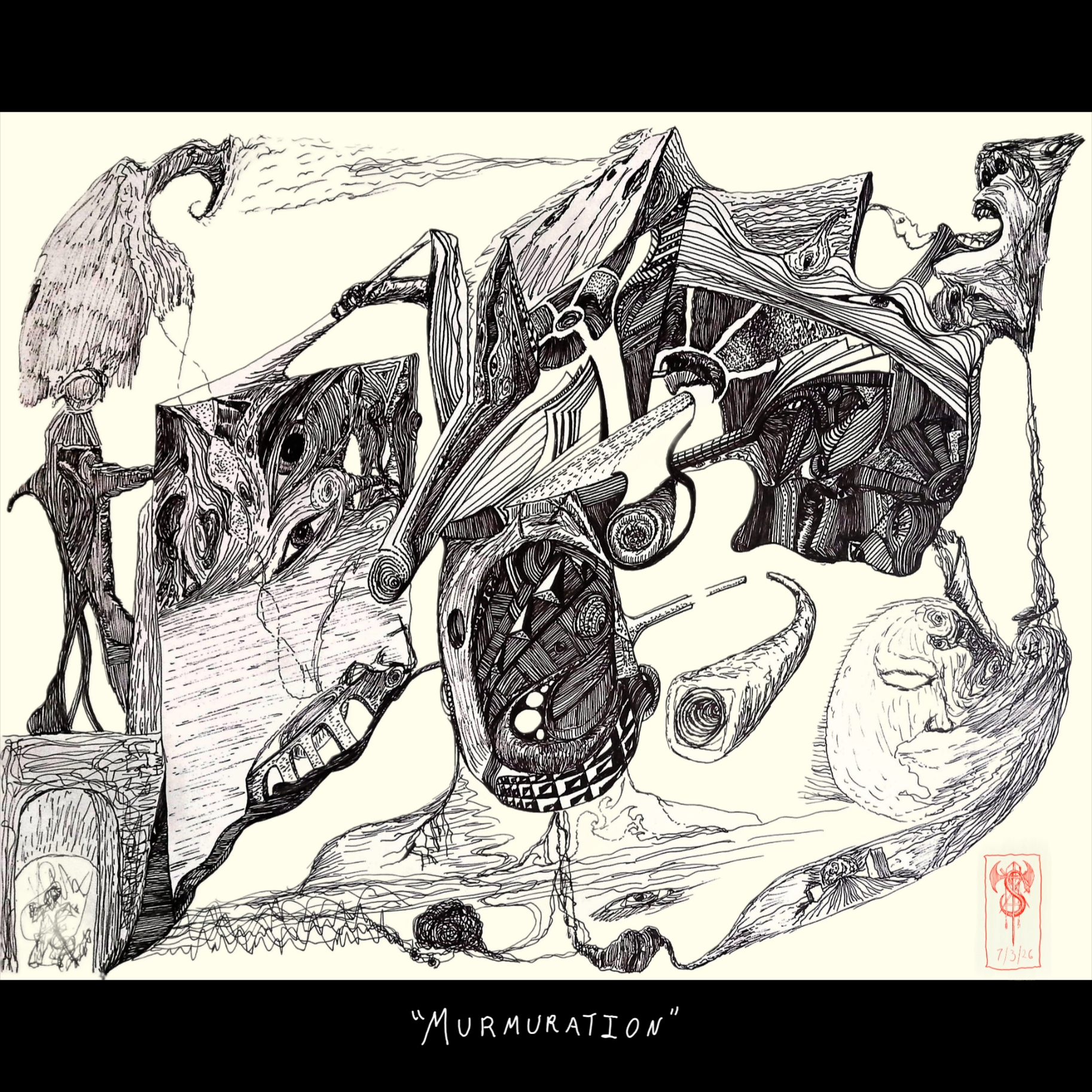
Nobody Move
Nobody move, there’s blood on the floor
And I can’t find my heart
Where did it go? Did I leave it in the cold?
So please give it back, ’cause it’s not yours to take
It must’ve fell when I lost my mind
Deep in the cut, drowning in a pain
Somebody help, ’cause I can’t find my way
Nobody move, nobody move
Transitions are difficult for me. Change is hard for all of us.
I do this equivocating, qualifying thing where I follow an observation about a struggle I face with the caveat that everyone struggles too.
That’s one of my masks coming in on cue.
Don’t make it about you, Tommy.
You’re not special. Everyone else suffers.
So I grin and bear it.
Do that for over 40 years, and you don’t even realize the pain anymore.
You remember what Michael Stipe said during a time that may as well be REM sleep; it’s so buried in the past that you can’t distinguish it from dream or memory. He was walking amongst a bunch of cars in a traffic jam, reminding us that everybody hurts. Sometimes.
So, at the risk of making this post that I’m writing about me all about me, I will talk about how transitions are hard for me and how I navigate (with varying levels of success) these changes.
Well, my mind is going through them changes
I feel just like committing a crime
Every time you see me goin’ somewhere
I know I’m goin’ outta my mind, yeah~Buddy Miles, “Them Changes“
My Mind’s Inertial State
Newton’s first law: an object in motion will stay in motion, and an object at rest will stay at rest unless acted upon by an outside force.
My mind is like that. I suspect many minds are like that.
And as inhabitants of planet Earth, we are aware that moving along with an object in the same inertial frame feels like standing still. It is why we can orbit the sun at over 660,000 mph while spinning like a top at over 1000 mph while sitting down, drinking coffee, and eating oatmeal.
But if that top started speeding up or slowing down significantly, or if the giant rock sprinted faster or phoned it in for a lap, we’d feel it (for as long as our bodies would sustain it).
Living in the inertial frame of planet Earth, we can walk in most directions and measure our speed and distance relative to the terrestrial tilt-a-whirl through spacetime. It’s when we butt against the edges of that inertial frame that we start to feel the gravity of change. But if we keep our butt near the center of that inertial frame, we maintain the illusion of consistency.
My inertial frame within the context of Planet Earth, Solar System, Milky Way Galaxy, etc… appears fixed. I carve out a box within this cosmic matryoshka and white-knuckle it from cradle to grave. It’s what we all do.
But like a train that begins to accelerate or decelerate, when the trajectory of life banks for an upcoming turn, all the individual parts that seemed to be a cohesive self start to scatter along their individual vectors. You dissolve, disintegrate, feel shattered, but like a murmuration of starlings, you somehow hold it together. There’s a force within that permeates without. You realize the effort, the panicked effort, to hold yourself together is a reactionary illusion to a fear of dissolving… but those pieces have a memory that transcends time and space.

This fear of change comes from a fundamental misunderstanding of the Self. We often conceive of The Self as a tower of cards, a late-stage Jenga marathon, tenuously held together through continuity and care. Change in inertial states that cause us to butt against the boundaries of our comfort zones threatens that precarious stability.
What we don’t realize is that there’s a force inside each of these pieces, a subatomic bond much stronger than the centrifugal forces of an errant orbit.
The transition from June to July, for me, is like trying to make a sharp turn at high speed aboard an aircraft carrier with nothing bolted down. My nervous system, having adapted to a year of teaching public high school in a major metropolis, is burning up all the extraneous shields on reentry.
But this year, there’s unexpected turbulence during reentry, complicating the landing procedure. Life is changing. Life is always changing. But there are the incremental day-to-day changes, and there are the tipping-point type changes that test those subatomic bonds in the quirky quarks of the Self.
Faith.
Faith is trusting the starlings to keep their formations beautifully vibrant through each twisting path.

Leave a Reply